ZEISS Points to HOE as the Solution for Next-Generation AR Glasses
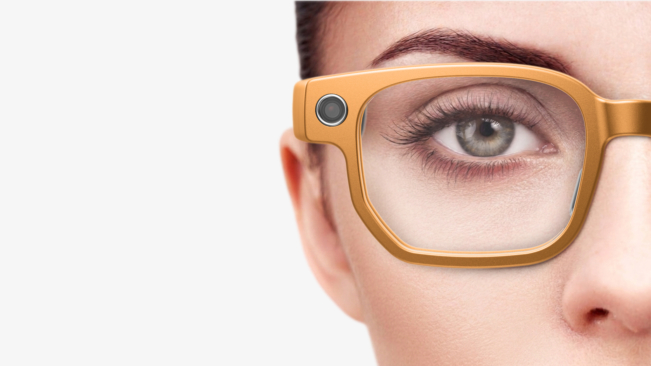
There is a simple idea at the heart of the HOE (Holographic Optical Element) AR combiner argument that often gets lost in the technical debate: AR glasses are, fundamentally, glasses first.
If you hold onto that idea, the question of which optical combiner to use for AR glasses becomes much clearer. The combiner — the lens element that blends digital content into the user’s view of the real world — should start from where glasses already are: the conventional curved spectacle lens that billions of people already wear and that the industry already manufactures at scale.
This is the position that ZEISS, one of the world’s largest lens manufacturers, has arrived at:
“From ZEISS XRX’s perspective, holographic optical element (HOE) combiners that build on the conventional spectacle lens represent a compelling option for future AR glasses. Integrating prescription power and natural lens aesthetics from the outset, while drawing on an industrial base that already manufactures hundreds of millions of lenses per year, aligns well with what we believe is needed for broad consumer adoption: comfort, visual performance, and scalable production. It is a position grounded not in optimism, but in the practical realities of optics, manufacturing, and the precision fitting that brings glasses to every individual face.”
HOE combiners: Built on the Conventional Lens
An HOE combiner works by applying a thin holographic film to the inside curvature of a conventional lens. The film is transparent to virtually all ambient light, while selectively conveying the specific wavelengths projected by the optical engine back toward the user’s eye. From the outside, it looks like a normal lens… because it is one.
This starting point matters more than it might seem. Because the HOE is built on a conventional lens, prescription correction is intrinsic to the design. The corrective function of the lens, its natural curvature, transparency, and thickness are all preserved. For the 50% of people who wear glasses and the further 13% who use contact lenses (in the US population), this is not a minor convenience. It is the difference between a product designed for them and one that accommodates them reluctantly.
The manufacturing implication is equally significant. Adding a holographic film to an existing lens manufacturing process is an additional step, but one that integrates into an ecosystem that already produces approximately 700 million lenses per year. The facilities, supply chains, and expertise already exist. Ultimately, HOE does not require building an entire new industry from scratch.
What HOE Combiners Deliver
Beyond the seamless approach, HOE combiners offer a set of technical advantages that matter for real-world wearability.
Light efficiency is the most consequential. CREAL’s HOE combiner conveys up to 20% of the display’s light — roughly 20 times more than what a typical diffractive waveguide outcouples. (The single direct reflection losses in HOE are far less than those in the multi-step propagation and extraction process inside a waveguide). This directly benefits the image brightness, battery life, and heat output.
Additionally, there’s no inherent ceiling on the field of view offered by HOE combiners: the holographic film can cover the entire lens surface, leaving room for future expansion without changing the fundamental architecture.
Combined with CREAL’s light field technology, HOE combiners can project genuine 3D digital imagery with natural focal depth, a key capability that waveguides have not provided to date in a practical form.
The Waveguide Limitations and Tradeoffs
Waveguide combiners have dominated the AR landscape for the past decade, appearing in HoloLens, Magic Leap, Meta Rayban Display, and other numerous products in development. They work in a technical sense, but the physical requirements they face lead to suboptimal tradeoffs.
Waveguides are, by design, disconnected from the conventional lens. They start from a different premise entirely: a flat optical slab with diffractive gratings (or reflective planes in the case of Lumus) that propagate and replicate light. Prescription correction is treated as an external problem to be solved separately, typically by adding a corrective lens as an extra layer. In most cases, the result is a thicker and heavier prescription lens. Their integration is complex, driving up costs, and versions engineered to reduce costs tend to compromise significantly on image quality.
The light efficiency deficit is structural. Diffractive waveguides deliver a small fraction of a percentage of the display’s light to the eye, requiring extremely bright, power-hungry displays to compensate. Each step toward better image quality demands more power and produces more heat.
Ultimately, waveguides are facing trade-offs between aesthetics, production cost and image quality. All of these are consequences of the fundamental approach.
A Clear Direction
A viable combiner solution for the next generation of AR glasses is one that can be manufactured at scale, supports all consumers who need prescription correction, is aesthetically accepted, and sold at a price that makes it a consumer product.
Like any technology, HOE combiners have their own engineering challenges to solve. But they start from a fundamentally stronger position: the conventional lens, and its already existing manufacturing and ecosystem. ZEISS’s confidence in this direction is a reading of what the physics and the manufacturing realities are pointing toward.